 |
| Getty Images |

05 March 2018
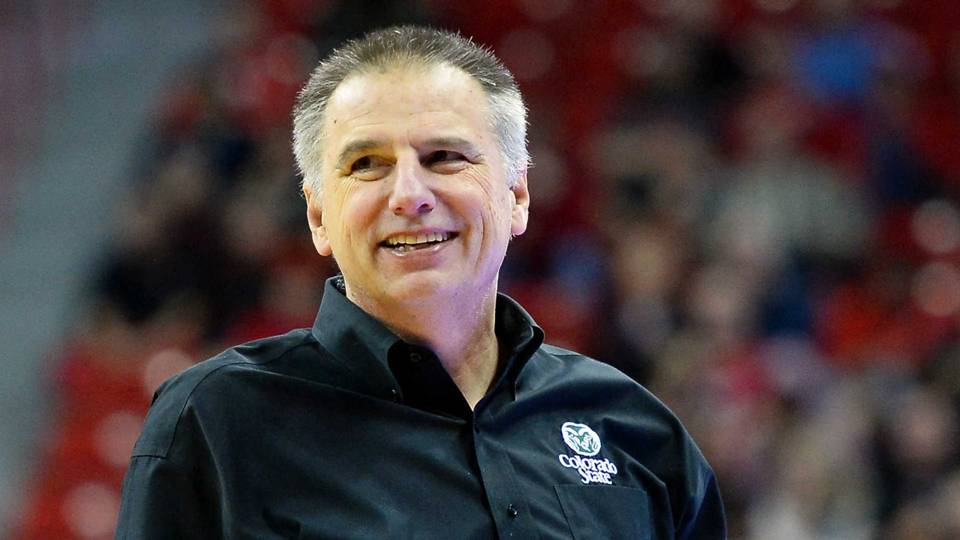
Larry Eustachy, CSU Basketball, and Emotionality

09 February 2018
A variety of thoughts: USA Gymnastics and Michigan State University
 |
| Source: Laurence Griffiths/Getty Images
From left: Simone Biles, Gabrielle Douglas, Lauren Hernandez, Madison Kocian and Alexandra Raisman
|
22 January 2018
A review: "We are man enough"
If you're looking for role models who are men attempting to create a better world for themselves and the people around them, this is a great starting point. They do a great job of asking the initial questions that men should be asking of each other. Questions like, "What does it mean to be a man? Why is that the meaning? Why is it so hard for men to be vulnerable? What do we do next?" They come up with lots of different answers, and a lot of the conversation around the dinner table seems to be more intellectual. And I think that's an ok place to start. For me, the harder work is to be
17 October 2017
Feels About Football
 |
| Photo Cred - Gerry Melendez |
I love the conversations around football. Something this popular also, simply put, holds a mirror to "our" society. Recent NFL seasons have exposed what we are willing to be complicit about in order to maintain "our" entertainment that is the sport of football. That list of what we're complicit about is incredibly long. Sports can challenge our understandings of masculinities, race, gender violence, sexual orientation, socioeconomic disparities, mental health, military, and all of those at once even if at times they feel like separate topics. It's one of the simplest ways to engage in important societal issues, and you can do this by simply asking, "Hey, what do you think about Kaepernick and what he stands for?" Simple and complex.
The topics above have been hashed out, re-hashed, and revisited as new information comes out. I'm not here to make a stance (although I have one). I'm here to explore something a little deeper that keeps surfacing for me year after year during football season. What I want to explore is the question: Is football something I actually enjoy or something that I learned to enjoy?
17 August 2017
Stay tuned!!!
What's up everybody! I know this blog has been dead for 2 years but that doesn't mean Men in the Movement hasn't been doing work on campus. The WGAC has been going through some major transitions and now we're fully staffed and ready to bring back things that we had to drop! There's a ton of things going on right now so be sure to check back soon to read our take on various oppressions happening in our country.
17 September 2015
Sexual assault and sports: Reframing the Derrick Rose conversation
The sports arena,
particularly men’s sports, is a great container to discuss many social issues
as it relates to masculinity and gender-based violence with men. The “off the
field” situations that professional athletes constantly bring onto themselves
is magnified by the incredible cultural and capitalistic machine of sports
media. This gives us many opportunities to discuss important issues like men’s
violence against women. The Derrick Rose situation is no different.
In short, a woman has
anonymously come forward with a lawsuit stating that Rose and 2 of his friends
drugged and raped her in August of 2013. More details can be found by simply
googling Derrick Rose. (More details here,
here,
and here.)
This isn’t the first (and
unfortunately, won’t be the last) time that a high profile male athlete is
accused of rape. We have some evidence of what conversations around these
stories are like, so I would like to take a moment to respond to some of the
common responses that I hear.
27 February 2015
Man Spreading: What is it and what’s the big deal?
When
we use the phrase Rape Supportive Culture, it can sometimes be difficult to
know exactly what this means and what it looks like. Sometimes, men will get
defensive because it implicates us as part of the problem (and we are part of the problem in a lot of ways
and are trying to work against this. Either way, men benefit from Rape
Supportive Culture. But that’s a discussion for another day…). Sometimes we can
feel helpless when we gain a better understanding of Rape Supportive Culture.
Because it’s a lot. And it can be difficult to know where to start. Ultimately,
if we want to reduce rates of rape and sexual assault in our culture,
particularly against women, children and trans-identified people,
30 January 2015
New Year's Resolutions for Men in the Movement
Find meaningful ways to impact campus
We resolve to get more involved on campus. For us, this means challenging ourselves to attend open events to increase our perspectives, to bring feminist philosophies into current student organizations we're involved in, and seek opportunities (employment and volunteer) where we can align our perspectives with others to help foster positive change.
Strive for growth
There are many different ways to grow. For us, we resolve to continue our education about gender, intersectionality, and social justice as a whole as a focus for self growth. We resolve to actively engage in conversations about masculinity and gender with our peers. We resolve to keep noticing oppression around us and hold ourselves accountable for our own oppressive actions. Through this self and community growth, we hope to increase participation in Men in the Movement overall.
Practice, practice, practice
In Men in the Movement, we talk a lot about expressing empathy, allowing ourselves to be vulnerable, and holding each other and ourselves accountable to our actions. We think that doing these things will bring us closer together as a community. We also want to honor that empathy, vulnerability, and accountability can be hard. So we resolve to practice being empathetic, practice being vulnerable, and practice being accountable, and support each other in these actions.
Let us know what you think! We invite feedback because feedback is love.
And here is some Calvin and Hobbes! Let's resolve to not take on his attitude...

We resolve to get more involved on campus. For us, this means challenging ourselves to attend open events to increase our perspectives, to bring feminist philosophies into current student organizations we're involved in, and seek opportunities (employment and volunteer) where we can align our perspectives with others to help foster positive change.
Strive for growth
There are many different ways to grow. For us, we resolve to continue our education about gender, intersectionality, and social justice as a whole as a focus for self growth. We resolve to actively engage in conversations about masculinity and gender with our peers. We resolve to keep noticing oppression around us and hold ourselves accountable for our own oppressive actions. Through this self and community growth, we hope to increase participation in Men in the Movement overall.
Practice, practice, practice
In Men in the Movement, we talk a lot about expressing empathy, allowing ourselves to be vulnerable, and holding each other and ourselves accountable to our actions. We think that doing these things will bring us closer together as a community. We also want to honor that empathy, vulnerability, and accountability can be hard. So we resolve to practice being empathetic, practice being vulnerable, and practice being accountable, and support each other in these actions.
Let us know what you think! We invite feedback because feedback is love.
And here is some Calvin and Hobbes! Let's resolve to not take on his attitude...
06 November 2014
#GamerGate and Masculinity

I’ll admit, I played a
ton of video games as a kid. I got the Super Nintendo one Christmas and some of
my fondest memories have been around those experiences. And maybe some of my
most shameful. I remember turning the game off on my friend because he was about
to beat me in Tecmo Super Bowl. Not cool…
Either way, I understand how
video games can become part of our identity. When we pour a bunch of hours into
anything and feel a sense of accomplishment, it’s impossible to deny that video
games have some level of influence over who we are.
And since video games are
also a form of media, it warrants just as much critique and examination as our
favorite TV shows and movies. One of the most well-known critiques comes from feminist
31 October 2014
Halloween! Have fun AND do work
Men. I know we’re action oriented. I know how you feel when
you just want to DO something about the injustices and inequities stacked
against women. Well it’s Halloween tonight and you have the opportunity to do
just that. Tonight is typically a street harassment fest. You will hear men
(and your friends) say
02 October 2014
UPDATE: Check out our Upcoming Events page for more recent information on our open events!

12 September 2014
The Effects of Accountability: Illuminating the Dark Corner of Male Entitlement
A recent article in The Chronicle of Higher Education (trigger warning) tells a story of something we as Men in the Movement have to be prepared to engage in conversation. The title is “Presumed Guilty: College men accused of rape say the scales are tipped against them” and I have no doubt that the recent spotlight on how Universities “handle” sexual assault cases will get students to talk about it. Which is good. And it doesn’t hurt to be prepared for when this happens with your friends.
It’s a lengthy article, but I highly suggest reading to at least the third picture. It has a lot of information that would be tough to summarize here. But one of the biggest take-aways is
04 September 2014
Everyday Violations of Consent: The Theft (not “leak”) of Personal Pictures
Recent internet buzz is
surrounding pictures of celebrities that were taken without consent. A typical
headline looks like this:
“Nude photos of Jennifer Lawrence and other female celebrities leaked online”
“Nude photos of Jennifer Lawrence and other female celebrities leaked online”
First and foremost, they
weren't leaked, they were stolen. We’ll get to that later.
I want to highlight some
of the things that other writers/bloggers have said. Both Jessica
Valenti and this
man (I assume it’s a man…) have named that the allure of these particular
nude photos is specifically that they were obtained without consent. Valenti
and Erin
Gloria Ryan talk about how deeply victim blaming the reaction has been.
I have to admit, the high
school me would have rushed
14 August 2014
Weighing in on the Hiring of Becky Hammon
I've always asked myself if I would recognize progress in the realm of social justice if I saw it. I tend to be hyper critical of the world around me (big surprise, I know...) so even if, lets say, in a conversation with a man who says, "In my experience, I've never heard someone say that 'boys don't cry,'" I'm not sure I would be able to believe it.
The hiring of Becky Hammon (CSU Alum!!) onto the San Antonio Spurs coaching staff marks the first time a woman has been hired as a full time assistant coach on a team in the National Basketball Association (NBA). The reaction that I have witnessed
25 July 2014
The NFL: Is the player suspension policy broken? Or just a reflection of the values we hold as a society?
An article in the Huffington Post outlines some of the idiotic rules and regulations the National Football League (NFL) has when it comes to punishing players for off the field behavior. To paraphrase, Ray Rice, who is popularly regarded as a superstar, received a 2 game suspension for knocking his partner out and dragging her around a hotel on video (trigger warning on the link). Other star athletes around the league have been suspended for an entire season for testing positive for marijuana. The punishment for a drug that is rapidly being decriminalized is eight times has harsh as beating a women in the eyes of the NFL.
I think it’s easy to say that the system is messed up. But we as Men in the Movement have to go deeper. We have to understand why this is a reality so that we can enter into conversations about gender based violence with other men. This is a perfect example of how we can use relatable “man topics” to reframe messed up realities in our society.
In this case,
I think it’s easy to say that the system is messed up. But we as Men in the Movement have to go deeper. We have to understand why this is a reality so that we can enter into conversations about gender based violence with other men. This is a perfect example of how we can use relatable “man topics” to reframe messed up realities in our society.
In this case,
24 July 2014
Why it’s important for Men in the Movement to talk about Eliot Rodger
On Saturday, May 24th,
2014, Elliot Rodger killed six people and himself in Isla Vista, California
outside of the University of California, Santa Barbara. The initial coverage of
the incident indicated that Rodger was a White male. But according to his
manifesto, Rodger identifies as “Eurasian”. Both mainstream coverage and the
blogosphere did not dive into the nuances of mixed race masculinity, which in
this case was an integral component missing from the overall discussion about
violent masculinity and misogyny in our culture. As members of Men in the
Movement, we need to bring these issues to the forefront.
However, making the
connection between mixed race identity and masculinity can be difficult. My
purpose today is to provide context, insight, and language around the nuances
of mixed masculinity. I will do this by talking about my personal experience as
well as my thoughts on Elliot Rodger’s Manifesto so that we can begin to have
these conversations in our communities. To do this, I will start with basic
gender socialization, then move into how that is complicated by race, while
talking about how that has personally affected me. From there, I will talk
about Rodger’s Manifesto from a mixed race male perspective.
29 April 2013
(Spring) Bystander Intervention Workshop
This week we'll focusing on developing some tangible skills that we can use to disrupt rape supprtive culture, more widely known as "bystander intervention" or "BI". Bystander intervention uses social psycology to examine what makes one more/less likely to intervene in a potentially hazardous situation.
On Wednesday we'll talk about this dynamic specifically as it relates to gender violence prevention and our role as men. There are complex dynamics in every situation and we'll have the time to workshop different scenarios to hear from you all what would work and what wouldn't.
For those of you who got to see Jackson Katz last Tuesday, he talked about how he uses BI when he works with college athletes and the military. He explained that it's relatively rare (but by no means non-existant) to be in a situation to stop a rape in progress so we should be focusing also on how we can be effective in intervening in scenarios that constitute rape support culture (which allow sexual violence to be perpetrated).
He used a triangle to illustrate the ways that each incidence of sexual assault is upheld/supported/enabled by different aspects of rape supportive culture, which we encounter every single day.

So for example, nearly every day I witness (and participate in) sexism. When I hear/see sexism and I don't say or do anything about it, my silence is basically saying that I condone what's happening. How can we begin to question and challenge the everyday sexism that works to normalize gender violence?
One of the the goals of the workshop is to have you all leave with more confidence in your ability to act upon what you feel is the right thing to do, which as we all know, it easier said than done.
Check out this video from "What Would You Do" where they try to get bystanders involved in a potential sexual assault:
And there's always Jay Smooth's advice on how to start difficult conversations:
On Wednesday we'll talk about this dynamic specifically as it relates to gender violence prevention and our role as men. There are complex dynamics in every situation and we'll have the time to workshop different scenarios to hear from you all what would work and what wouldn't.
For those of you who got to see Jackson Katz last Tuesday, he talked about how he uses BI when he works with college athletes and the military. He explained that it's relatively rare (but by no means non-existant) to be in a situation to stop a rape in progress so we should be focusing also on how we can be effective in intervening in scenarios that constitute rape support culture (which allow sexual violence to be perpetrated).
He used a triangle to illustrate the ways that each incidence of sexual assault is upheld/supported/enabled by different aspects of rape supportive culture, which we encounter every single day.

So for example, nearly every day I witness (and participate in) sexism. When I hear/see sexism and I don't say or do anything about it, my silence is basically saying that I condone what's happening. How can we begin to question and challenge the everyday sexism that works to normalize gender violence?
One of the the goals of the workshop is to have you all leave with more confidence in your ability to act upon what you feel is the right thing to do, which as we all know, it easier said than done.
Check out this video from "What Would You Do" where they try to get bystanders involved in a potential sexual assault:
And there's always Jay Smooth's advice on how to start difficult conversations:
22 March 2013
(Spring) Week 7: Rape Culture and Steubenville
Welcome back fellas!
For those of you who keep up on current events you've probably heard of Steubenville by now. The case has been given a lot of media attention and I think this is a perfect opportunity to examine Steubenville as a case-study for rape culture.
We've touched on the concept of rape culture (also known as rape-supportive culture, or RSC) but this week we'll deepen our understanding of the concept and see how it operates in "real life".
Just so folks know what we're talking about, Steubenville is a small town in Ohio where in August of 2012 members of the high school football team raped a young woman. Two of the men were charged with rape and will be spending a minimum of 1 year in juvinile jail.
Sounds pretty straight-forward right? Well if you google "Steubenville" you'll quickly see that the case has been surrounded in controversy because of attempts to minimize the act, cover it up, protect the perps, victim blame, sympathize with the accused, and villify the victim.
We've got a lot to talk about!! Check out this video where a guy recaps the case, then talks about how rape culture enables, and defends the acts:
For those of you who keep up on current events you've probably heard of Steubenville by now. The case has been given a lot of media attention and I think this is a perfect opportunity to examine Steubenville as a case-study for rape culture.
We've touched on the concept of rape culture (also known as rape-supportive culture, or RSC) but this week we'll deepen our understanding of the concept and see how it operates in "real life".
Just so folks know what we're talking about, Steubenville is a small town in Ohio where in August of 2012 members of the high school football team raped a young woman. Two of the men were charged with rape and will be spending a minimum of 1 year in juvinile jail.
Sounds pretty straight-forward right? Well if you google "Steubenville" you'll quickly see that the case has been surrounded in controversy because of attempts to minimize the act, cover it up, protect the perps, victim blame, sympathize with the accused, and villify the victim.
We've got a lot to talk about!! Check out this video where a guy recaps the case, then talks about how rape culture enables, and defends the acts:
13 March 2013
(Spring) Week 6: The Complexities of Consent
This week we'll have Mitch Trebesh who currently works at Front Range Community College and has worked at The Sexual Assault Victim Advocate center (SAVA) as an educator for highschool guys. He is a really awesome guy and has done a TON of work around these issues.
Today we'll be focusing on consent. So in theory, consent is a pretty straight-forward concept but as we saw last week, there are times when it's not so clear. We'll spend this week exploring what consent actually is, how it makes sexual experiences better, and brainstorm ways to make asking and communication part of the sexual process.
See you all at 6!
Today we'll be focusing on consent. So in theory, consent is a pretty straight-forward concept but as we saw last week, there are times when it's not so clear. We'll spend this week exploring what consent actually is, how it makes sexual experiences better, and brainstorm ways to make asking and communication part of the sexual process.
See you all at 6!
04 March 2013
(Spring) Week 5: Men and Sexual Assault
Hey Fellas!
So we have a TON to talk about this week! We'll be going over 2 main sections:
1.) Sexual Assault 101
-We'll explore some of the statistics, dynamics, and nuances of sexual assault.
2.) Who are the Perpetrators
-We'll explore the profile of a "typical" college perpetrator which will open up lots of questions about male culture, socialization (learned behavior), and our role in ending these forms of violence.
This article is by David Lisak, who has done a lot of work profiling perpetrators and advocating against sexual violence. Check out at least the first 3 pages of this article, it's really really informative and worth the whole read.
So we have a TON to talk about this week! We'll be going over 2 main sections:
1.) Sexual Assault 101
-We'll explore some of the statistics, dynamics, and nuances of sexual assault.
2.) Who are the Perpetrators
-We'll explore the profile of a "typical" college perpetrator which will open up lots of questions about male culture, socialization (learned behavior), and our role in ending these forms of violence.
This article is by David Lisak, who has done a lot of work profiling perpetrators and advocating against sexual violence. Check out at least the first 3 pages of this article, it's really really informative and worth the whole read.
Subscribe to:
Posts (Atom)